
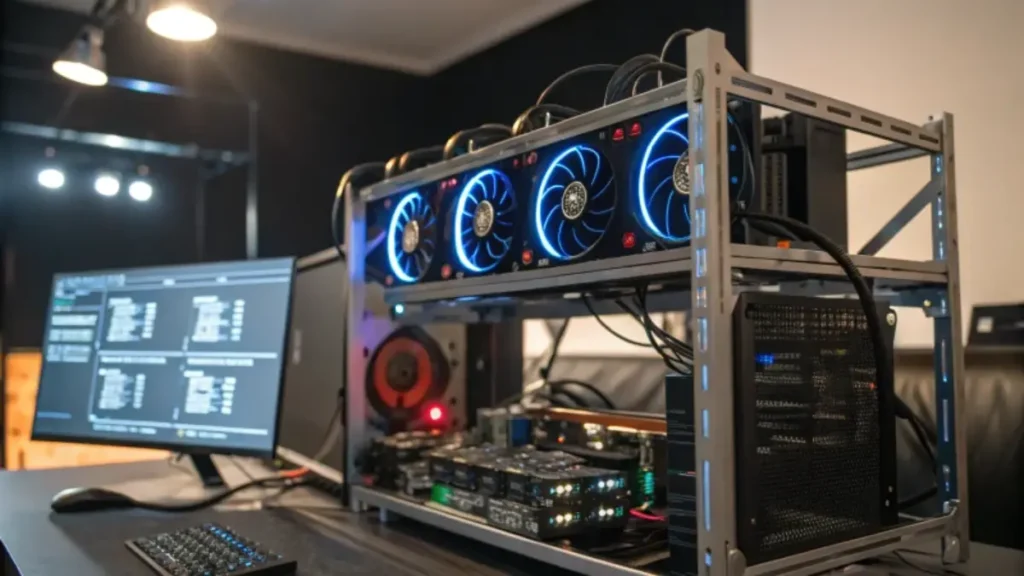
The world of crypto mining is currently facing a harsh reality check. Reports are flooding in that miners, even those who invested in the latest, most efficient Application-Specific Integrated Circuit (ASIC) rigs, are being forced to turn off their machines. This mass shutdown points to a massive squeeze on miner margins, pushing the break-even point beyond profitability for many.
So, what’s driving this crisis? It’s a perfect storm of three major factors:
Collapsing Profitability
The most immediate cause is the plummeting profitability, reflected in record-low hash prices. A miner’s revenue comes from the block reward (newly minted coins) and transaction fees, all determined by the cryptocurrency’s market price. When the coin price drops significantly, the value of the mined reward does too. However, the costs associated with mining are not falling nearly as fast.
Skyrocketing Operational Costs
Electricity is the undisputed king of mining operational costs, accounting for the vast majority of ongoing expense. Global economic crises and rising energy prices have pushed these bills to unsustainable heights for many operators. This is coupled with the immense upfront capital cost of buying and deploying a fleet of powerful, modern ASIC miners—which can run into the thousands of dollars per unit. Even new rigs, while more power-efficient, still consume colossal amounts of energy, making high electricity prices a death blow to profitability.
Unrelenting Network Difficulty
The Bitcoin network is designed to adjust its mining difficulty to ensure a new block is found roughly every 10 minutes. When more miners (more computational power or hash rate) join the network, the difficulty increases. While some miners are turning off their machines, the difficulty hasn’t dropped enough to offset the high costs. The combined effect of high difficulty (less coin per effort) and high costs (more to spend per effort) means that for a huge segment of the market, the amount of crypto mined isn’t enough to cover the daily electric bill, let alone the total cost including hardware depreciation.
This shakeout is leading to a consolidation in the industry, forcing out less-capitalized miners and older, less-efficient equipment. It’s a classic “survival of the fittest” scenario, where only the largest, most efficient operations with access to the cheapest power sources will remain standing.